Quick answer
We know the bathtub debate is a defining moment in any 2026 bathroom remodel. Choosing a freestanding tub vs built in bathtub comes down to evaluating your bathroom’s square footage, plumbing capabilities, and long-term family needs.
A built-in tub maximizes space and provides safety ledges, whereas a freestanding soaking tub serves as a stunning visual centerpiece requiring floor-mounted plumbing.
Our team finds that this choice single-handedly dictates the flow of your San Antonio remodel. Upgrading your bathing area requires careful planning based on current market data.
We will walk you through the structural requirements, the hidden installation costs, and the true resale impact.
What this guide covers
This guide covers the four most critical factors for selecting a bathtub: space needs, plumbing implications, aesthetics, and resale considerations. You will find specific measurements and cost data to help evaluate your bathtub options.
- Space needs and the 10 to 14-inch clearance rule for freestanding models.
- Plumbing implications involving floor-mounted fillers versus standard wall valves.
- Soaking tub aesthetics and popular materials like cast iron or acrylic.
- Resale considerations based on the 65 to 80 percent return on investment expected for mid-range 2026 renovations.
Why this matters in San Antonio
Bathtub selection matters in San Antonio because relocating plumbing through a concrete slab foundation will significantly alter your project’s timeline and budget. Making the wrong choice early on often leads to spiraling expenses if not managed correctly.
Our design-build model solves this by managing the design, materials, and construction under a single contract. This unified approach eliminates the costly communication gaps that happen when homeowners juggle a separate designer and contractor.
We have refined this exact process at SA Remodel Pros over the last 26 years across more than 2,000 local projects. The current 2026 national average for a mid-range bathroom update sits around $16,500. Keeping your project close to that baseline requires strict coordination and expert planning.
To protect your budget, our layout phase actively flags:
- Floor-mounted tub fillers requiring concrete trenching.
- Weight-bearing limits for cast-iron tubs on second floors.
- Clearance issues that would block routine cleaning.
Hidden surprises are the biggest enemy of any home addition or luxury upgrade.
“Identifying a floor-mounted drain requirement before demo begins is the single most effective way to protect a San Antonio slab foundation remodel.”
Side-by-side
A side-by-side comparison reveals that built-in bathtubs generally cost around $1,350 to install, while freestanding tubs average $1,200 for the unit alone and require more expensive floor-mounted plumbing. Built-in models offer superior space efficiency and bathing safety for young children, while freestanding designs deliver unmatched visual impact for luxury upgrades.
| Feature | Built-In Bathtub | Freestanding Bathtub |
|---|---|---|
| Average Cost (Installed) | $1,350 (standard acrylic) | $1,200+ (plus floor plumbing) |
| Space Required | Highly efficient, fits flush to walls | Requires 10 to 14 inches of wall clearance |
| Plumbing Setup | Standard wall-mounted valves | Floor-mounted filler and drain |
| Best For | Growing families, bathing children | Empty-nesters, luxury master baths |
We often see homeowners underestimate the spatial footprint of a standalone unit. Freestanding tubs require a breathing room of 10 to 14 inches from the back wall for cleaning access. A standard alcove built-in sits flush against three walls, maximizing every inch of available flooring.
Our construction crews prefer built-in installations for tighter footprints because they utilize existing wall plumbing. This setup completely avoids tearing into the subfloor or concrete slab.
When matching a tub to your daily routine, consider these practical factors:
- Toddler Safety: Built-in tubs have lower sides and ledges, making bathing children much easier.
- Accessibility Constraints: Freestanding tubs feature a 20 to 24-inch rim height that makes stepping in difficult for some users.
- Luxury Upgrades: Empty-nesters typically prefer the modern, spa-like sanctuary created by a freestanding unit.
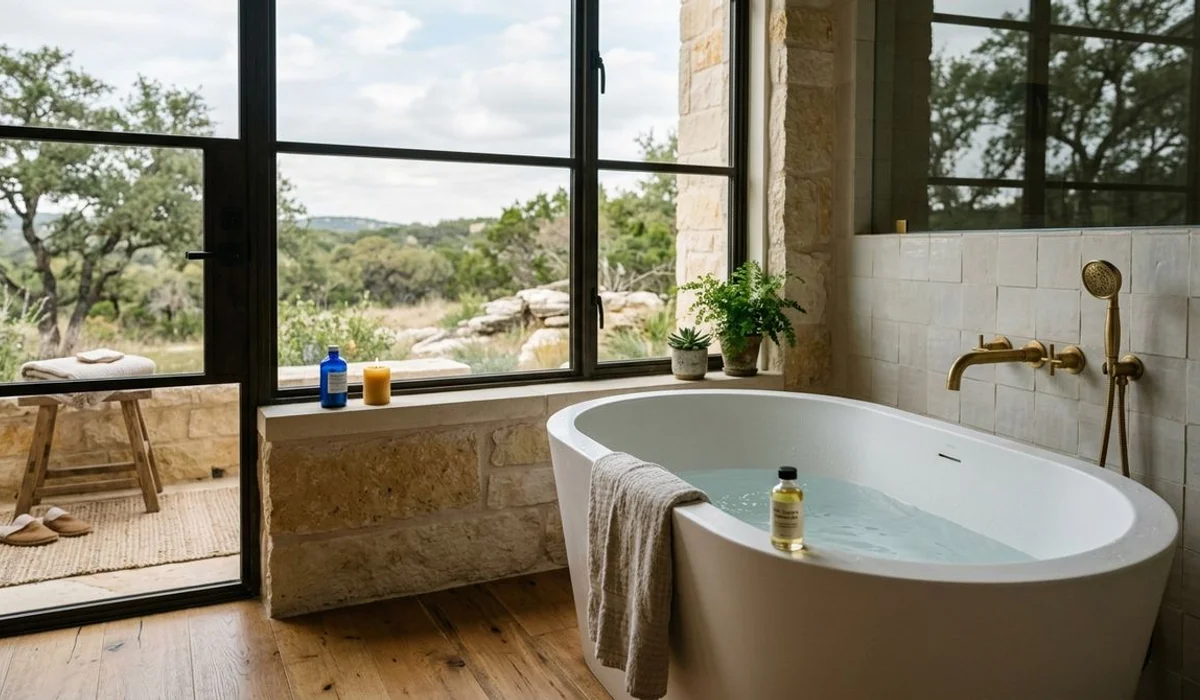
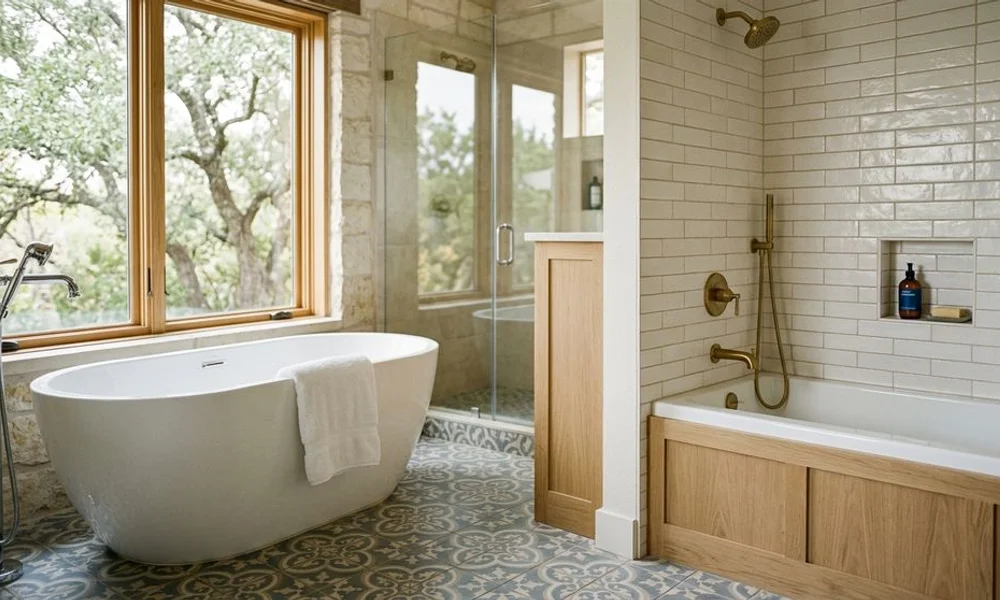
Our team installs premium acrylic or cast-iron freestanding soaking tubs to anchor these high-end spaces. A dedicated wet room enclosing both a glass shower and a freestanding tub is a highly requested 2026 design trend.
Things homeowners ask first
Homeowners frequently ask if freestanding tubs require special plumbing, and the answer is a definitive yes. You will need a floor-mounted tub filler and a precisely located floor drain to support these fixtures.
Do freestanding tubs need special plumbing? Floor-mounted plumbing is absolutely required for a standalone unit, which directly impacts your layout and budget. Plumbers must install a rough-in drain body into the subfloor before laying any tile. Our plumbing teams typically position the drain hole exactly 10 to 14 inches from the wood framing to meet current building codes. Failing to plan this during the initial rough-in phase is an incredibly common and expensive mistake. We always recommend confirming the exact tub model and its specifications before finalizing the floor plan. You can sometimes use wall-mounted fillers if you push the tub close to a wall, but this setup severely restricts cleaning access.
Which tub is better for resale? Keeping at least one bathtub in the house generally protects your resale value, particularly in family-oriented neighborhoods. Real estate data from 2026 shows that a mid-range bathroom remodel retaining a tub yields a 65 to 80 percent return on investment. Our real estate contacts confirm that homes without a single bathtub often sit on the market longer and receive lower offers.
Key resale impacts include:
- High-end appeal: Freestanding tubs can boost a home’s perceived value by 5 to 10 percent in luxury markets.
- Family necessity: Built-in tubs remain a hard requirement for buyers with young children.
- Optimal strategy: We advise placing a built-in tub in the guest bath and a freestanding unit in the primary suite.
This strategic combination delivers the highest overall return.
Related service
This guide directly pairs with our specialized remodeling services to help you integrate your new bathtub into a broader room design. You can view comprehensive project scopes and pricing on our dedicated service pages.
We invite you to explore our bathroom remodeling service page for a closer look at our process. You will find a detailed project gallery showcasing both freestanding and built-in installations across San Antonio.
Our team is ready to help you evaluate these choices and deliver a fixed-price contract for your next luxury upgrade.
Reach out today to schedule your initial design consultation.
Related reading
For a deeper dive, see our guide on Walk-In Shower vs Bathtub: Which Adds More Value? — it covers the next set of decisions homeowners weigh on a project like this.