Quick answer
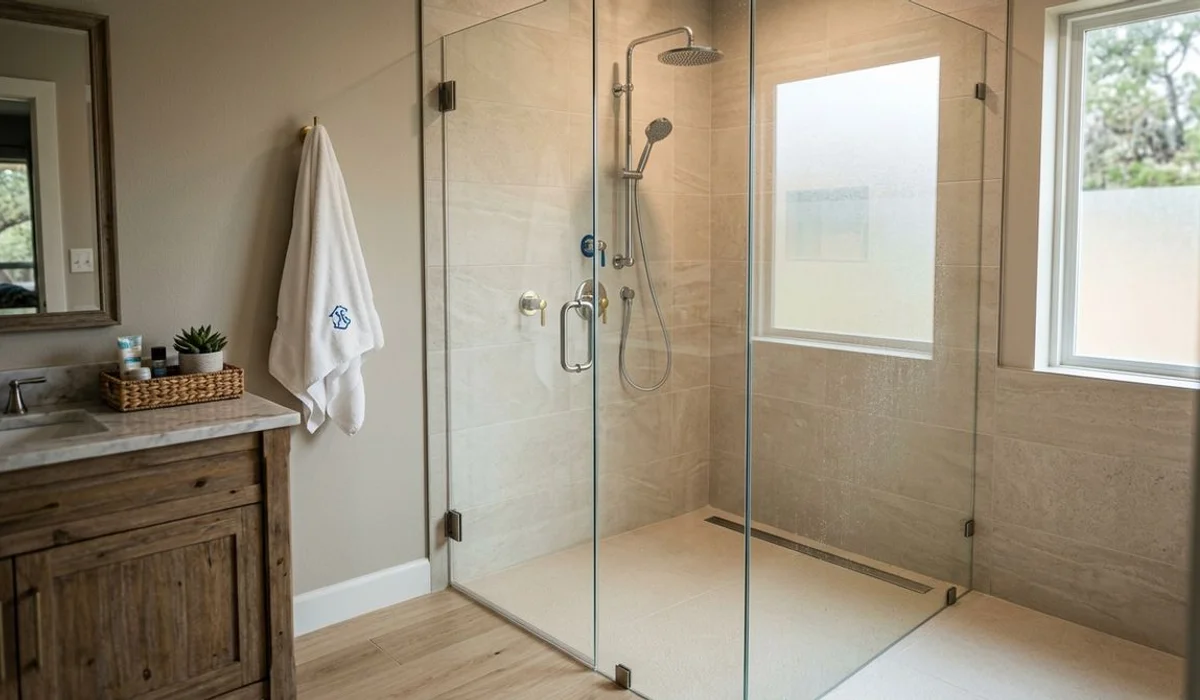
You know how standard bathroom renovations often run into the same limitation of stepping over a bulky shower curb. The transition to a curbless walk in shower solves this by lowering the subfloor and angling the floor directly into a linear drain. From an engineering perspective, that specific floor modification is the exact detail separating a highly functional space from a standard cosmetic flip.
We know this construction method relies heavily on advanced waterproofing systems and frameless glass to keep water properly contained without a step. A strict one-quarter inch per foot decline into the drain prevents pooling and ensures the accessibility benefits for San Antonio homes are actually safe.
Let’s look at the hard data behind these installations, explore the specialized hardware required, and review the structural modifications you need to plan for.
What this guide covers
This guide outlines the essential components required for a successful zero threshold shower design. The following sections break down the hardware, construction methods, and financial logic behind these accessible upgrades.
We cover the critical differences between a standard curbed unit and a true flush-floor installation. A proper zero-threshold design requires specific structural changes that impact the total budget and timeline.
Here is a quick comparison of the core elements we evaluate for every walk-in shower installation:
| Shower Component | Standard Curbed Shower | Curbless Walk-in Shower |
|---|---|---|
| Entry Design | 4-inch to 6-inch step | 0-inch threshold, flush with bathroom floor |
| Drainage System | Center point drain with multi-directional slope | Linear drain (e.g., Infinity Drain FCS Series) with single slope |
| Average US Cost (2026) | $6,000 to $10,000 | $12,000 to $25,000 |
| Accessibility | Not wheelchair accessible | Meets ADA standards with 60x30 inch clearance |
Why this matters in San Antonio
Most San Antonio homeowners hit the same friction when planning a remodel, managing too many decisions, multiple subcontractors, and a price that drifts upward once the work begins. Fixing this requires a design-build process where one team handles the design, material selection, and construction under a single contract.
Our team at SA Remodel Pros was founded to provide the community with high-quality remodeling services, and we have utilized this unified model for more than 26 years across 2,000-plus local projects.
The local housing data for 2026 highlights why doing this correctly is so crucial right now:
- Rising Inventory: Active residential listings in San Antonio are up nearly 18 percent, giving buyers more power in the market.
- Stable Pricing: Local median home prices have stabilized around $315,000, encouraging homeowners to improve their current spaces rather than move.
- Universal Appeal: Upgrading to a curbless walk in shower provides immediate daily comfort while adding long-term financial value for aging-in-place readiness.
We consistently see that homes featuring accessible design elements appeal to a much wider group of future buyers. A universally designed bathroom prevents the need for future structural tear-outs.
What we recommend
If you are researching this question, the next step is usually a 20-minute conversation with a project coordinator to review your existing floor structure. The construction requires assessing whether your home needs slab cutting or joist modifications before any design work begins. We can tell you whether your project is straightforward or structurally demanding during this initial chat.
Lowering a concrete slab or modifying wood joists are the primary reasons a US curbless installation costs between $12,000 and $25,000 in 2026. There is no commitment required to get this structural insight.
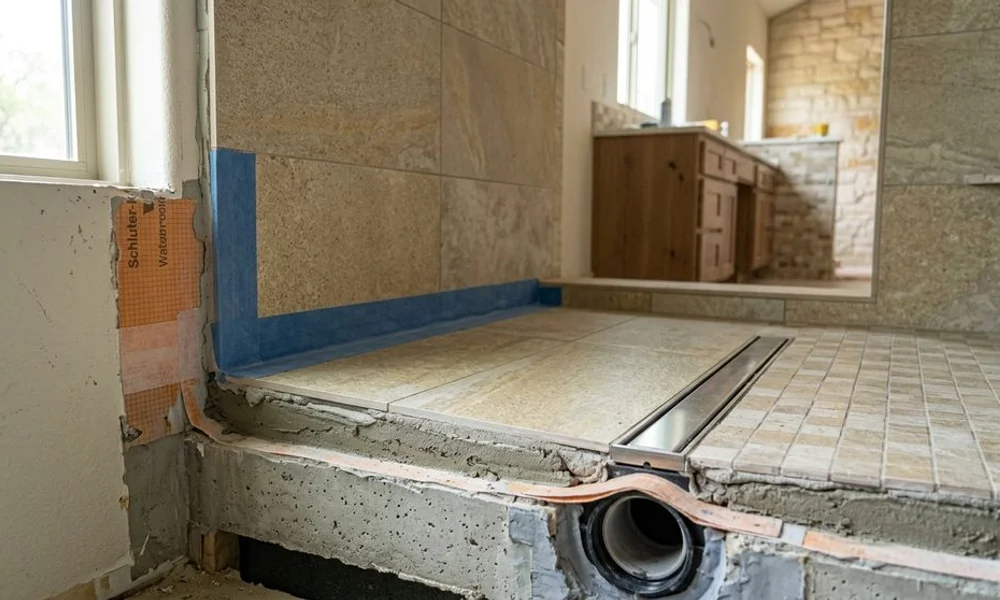
For the actual materials, industry professionals strongly favor modern membrane waterproofing over older PVC liners or traditional hot mopping. Our specific recommendation is pairing an Infinity Drain FCS Series linear drain with a factory-applied Schluter-KERDI membrane, giving you a guaranteed watertight seal and single-directional slope for the shower pan.
Things homeowners ask first
Homeowners frequently have concerns about the technical definitions and potential risks of flush-floor bathing spaces. The answers below address the most common physical and operational realities of these upgrades.
What is a curbless shower?
A curbless shower is a bathing space with no step or raised entry, meaning the bathroom floor flows perfectly level into the wet area. To qualify as a fully ADA-compliant roll-in shower in the US, the interior must have a minimum clear floor space of 60 inches wide by 30 inches deep.
We always remind clients that any threshold present cannot exceed a half-inch in height. This minor bump must be properly beveled to ensure safe wheelchair access and comply with accessibility guidelines.
Do curbless showers leak?
These walk-in spaces do not leak when waterproofed correctly with a precise slope and a high-capacity linear drain shower system. The national building standard requires angling the floor exactly one-quarter inch per foot to guide water quickly away from the main room.
Our preferred method places a linear drain against the back wall instead of relying on a traditional center drain. A single, consistent slope directing water to a wall drain eliminates the difficult multi-directional angles where water tends to pool and escape.
Related service
This guide pairs perfectly with our bathroom remodeling service page. There you will find scope details, pricing tiers, and a local project gallery for your curbless walk in shower project.
We encourage you to reach out directly to discuss your specific floorplan. Scheduling a 20-minute consultation is the fastest way to get accurate, localized cost expectations for your upcoming remodel.
Related reading
For a deeper dive, see our guide on Waterproofing a Shower: Schluter, Kerdi & Linear Drains — it covers the next set of decisions homeowners weigh on a project like this.