%20staged%20in%20a%20room%2C%20authentic%2C%20natural%20light)
Quick answer
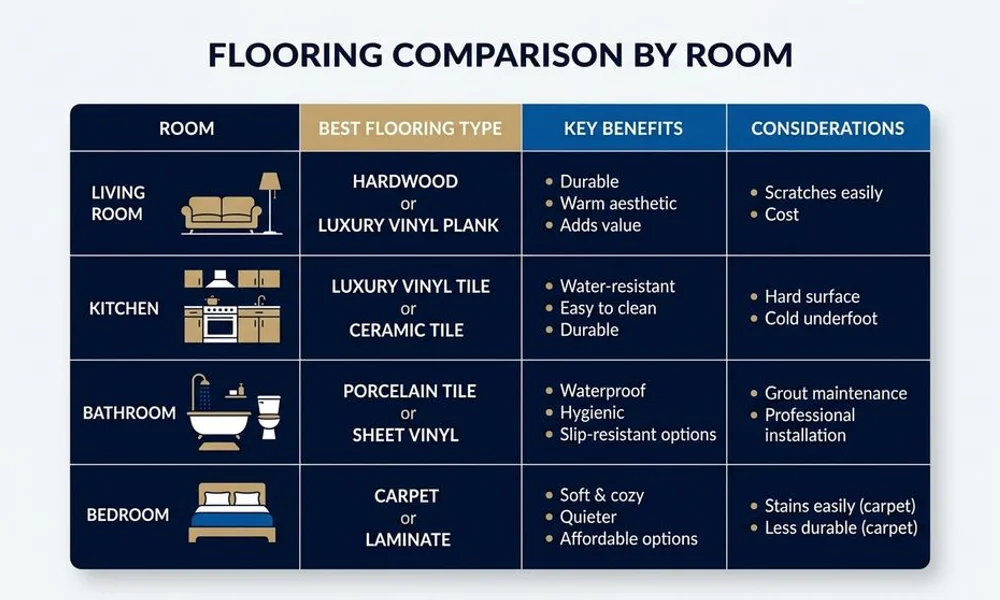
Compare LVP, tile, and wood flooring by durability, moisture and heat performance, cost, and look to pick the right floor for each room in your home.
What this guide covers
- Durability
- Moisture/heat performance
- Cost and look
- Room-by-room suitability
Why this matters in San Antonio
Most San Antonio homeowners hit the same friction when planning a remodel: too many decisions, too many contractors, and a price that drifts upward once the work begins. The single biggest fix is a design-build process — one team owning design, materials, and construction under one contract. That’s the model we’ve used at SA Remodel Pros for more than 26 years across 2,000+ projects.
Side-by-side
The shortest version of the comparison: design-build collapses every step into one team, one contract, and one fixed price. The alternative model — separate designer, contractor, suppliers — relies on coordination between unrelated parties, and that coordination is where time, money, and quality leak out of the project.
Things homeowners ask first
Is LVP better than tile? — LVP is warmer and DIY-friendlier; tile is more heat- and moisture-resistant.
What flooring is best for Texas heat? — Tile and quality LVP both handle heat well; wood needs more care.
Related service
This guide pairs with our home flooring service page, where you’ll find scope, pricing, and project gallery for the related work.
Related reading
For a deeper dive, see our guide on What’s Involved in Removing and Replacing Existing Flooring — it covers the next set of decisions homeowners weigh on a project like this.