Quick answer
We know the challenges of building on unpredictable ground. When planning a room addition foundation, clay soil in Bexar County presents an immediate obstacle because it actively shifts and swells.
This extreme movement dictates exactly how new slabs must be designed and poured. Our team utilizes engineered slabs, deep footings, and rigorous soil testing to prevent structural failure.
Let’s look at the data, what it actually means for your property, and how to build a solid base.
What this guide covers
The following topics are essential for a successful project:
- Expansive clay movement
- Engineered slabs and footings
- Settlement prevention
- Soil testing
Why this matters in San Antonio
Most San Antonio homeowners hit the same friction when planning a remodel with too many decisions, separate contractors, and a budget that drifts upward. The local ground itself creates massive complications, as the region is dominated by Houston Black Clay. We have seen this highly reactive vertisol expand up to 30 percent in volume when saturated with rain.
This extreme swelling puts immense upward pressure on standard residential slabs. Our 26 years of experience at SA Remodel Pros across more than 2,000 projects proves that managing design and construction under one contract is the best solution. You avoid the common trap of hiring separate companies who point fingers when soil complications arise.
A unified design-build process keeps everyone accountable for the structural integrity of the addition. We stabilize costs by factoring in three specific environmental conditions before the first shovel hits the dirt:
- High Plasticity Index: Local clay soils contain montmorillonite minerals that act like a giant sponge.
- Drought Contraction: Extended dry spells cause the earth to shrink and pull away from the concrete edge.
- Heavy Downpour Heaving: Sudden rainstorms flood the parched ground, causing rapid, uneven lift beneath the house.
Building a secure room addition foundation means engineering the concrete to survive this continuous cycle.
What we recommend
If you are researching this question, the next step is usually a 20-minute conversation with a project coordinator. We can tell you whether your project is straightforward, complicated, or requires structural engineering input before any design work begins. A thorough geotechnical soil test is the most valuable tool for this early planning phase.
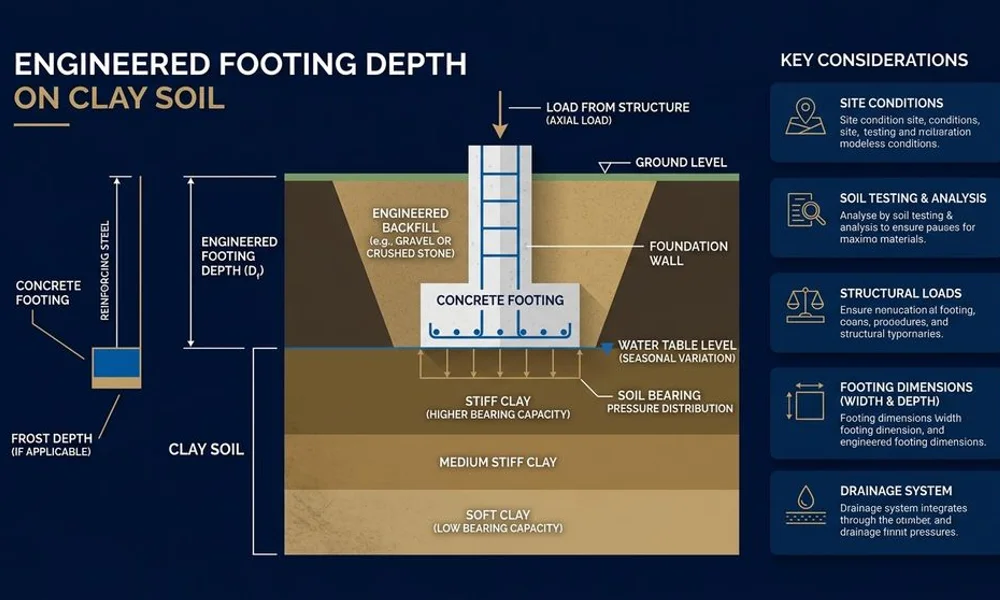
These laboratory tests calculate the Potential Vertical Rise, or PVR, of your specific lot. Our local engineering partners frequently measure PVR levels between 2 and 3 inches across Bexar County. This precise data dictates the exact depth and thickness required for your new concrete footings.
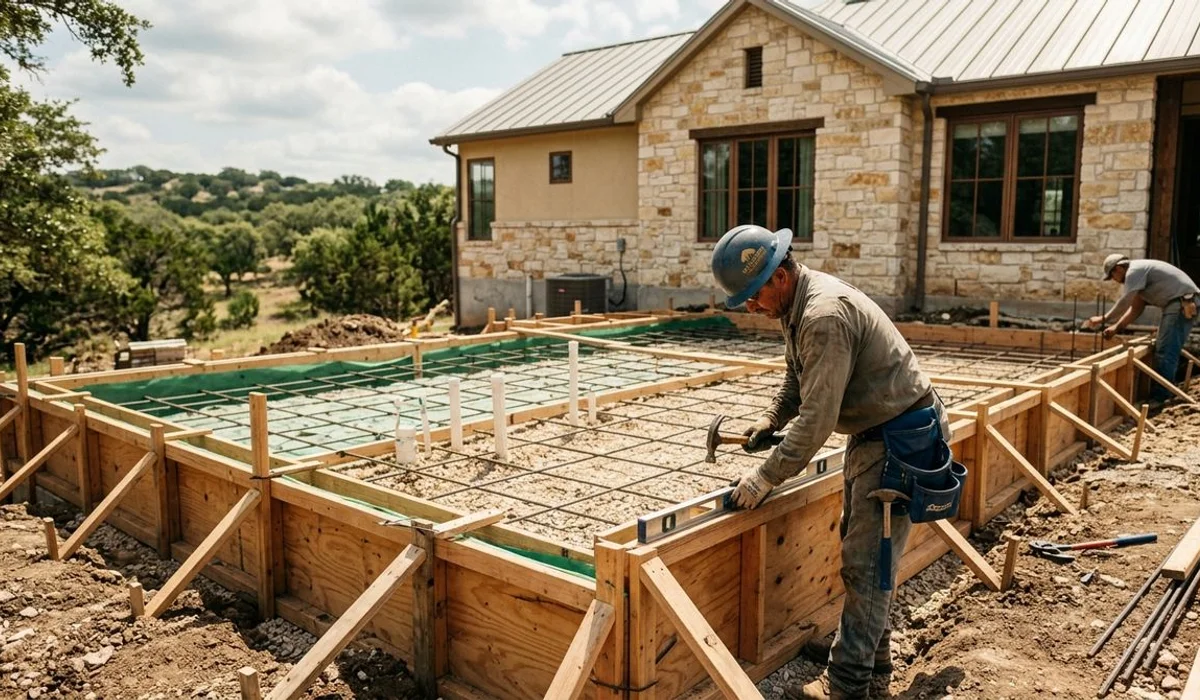
Bexar County clay soil foundation guidelines often require exterior footings to reach a minimum of 24 inches below the natural grade. We evaluate these requirements during the initial consultation to give you an accurate picture of the construction scope.
Here is a quick comparison of standard versus engineered approaches for clay soils:
| Foundation Feature | Standard Soil Approach | Expansive Clay Approach |
|---|---|---|
| Exterior Footing Depth | 12 to 18 inches | 24 inches minimum |
| Steel Reinforcement | Basic wire mesh | Number 4 deformed steel bars (1/2-inch) |
| Soil Preparation | Standard compaction | Pre-saturation to 18-inch depth |
There is absolutely no commitment required to review these details with our team.
Things homeowners ask first
Will my addition’s foundation crack on clay soil? Not when engineered correctly with footings sized to the soil. We prevent addition slab settlement by installing stiffened grid-type beam and slab foundations designed specifically for high-plasticity clay.
Engineers reinforce these heavy concrete sections with number 4 deformed steel bars to resist the immense uplift pressure from the ground. Proper grading and exterior moisture control also provide a critical line of defense for the new slab.
Do you do soil testing? When the site and scope call for it, yes. We coordinate with established local geotechnical firms like InTEC or Arias to perform professional site evaluations.
These experts drill core borings at 5-foot intervals to analyze the active zone depth beneath your yard. The resulting laboratory data ensures your foundation is built to withstand local geological stresses.
Related service
Expanding your living space should be an exciting milestone, not a structural headache. We ensure every new foundation rests securely, regardless of the challenging soil beneath it.
This guide pairs with our home additions service page, where you will find scope, pricing, and a project gallery for the related work. Reach out to our team today to schedule your initial site evaluation and start planning your project.
Related reading
For a deeper dive, see our guide on How Expansive Clay Soil Affects San Antonio Remodels & Additions — it covers the next set of decisions homeowners weigh on a project like this.